The Final Problem Netflix Ending Explained: Killer Identity, Basil’s Choice, and Plot Breakdown
I went into The Final Problem expecting a tidy locked-room puzzle with a nice period hat on it. Four episodes later I was staring at the credits, mildly annoyed and completely hooked. Netflix dropped this Spanish thriller on September 25, 2026, and it has been rattling around my head ever since. Here’s what happens, who did it, and why the ending splits people so badly.
A Storm, a Hotel and Thirteen People Who Can’t Leave
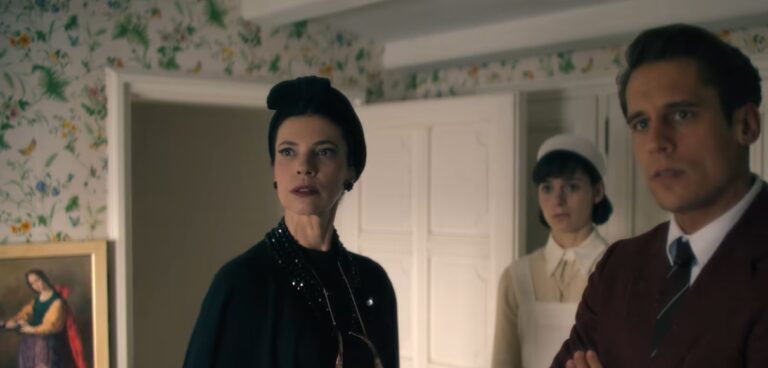
The setup is pure golden-age mystery. It’s June 1959 on Santa Águeda, a tiny islet off Mallorca. A violent storm cuts the upscale hotel off from the mainland, leaving thirteen strangers stuck together. Then a quiet English tourist, Elisa Mander, turns up dead. It looks like suicide at first glance, but a few details refuse to sit right.
There’s no police officer, no doctor with authority and no phone line. So the guests turn to the one man who has ever played a detective.

The series is adapted from Arturo Pérez-Reverte’s 2023 novel El problema final and directed by Félix Viscarret. If you love a claustrophobic whodunnit, the raw ingredients are all here.
The Detective Who Isn’t One
Benjamin Basil, played by José Coronado, is a washed-up actor famous for playing Sherlock Holmes on screen. He has no investigative training and no forensic instincts, just a lifetime of pretending. The guests push him into the role anyway, and he plays along because it’s easier than admitting he’s a fraud.
Coronado is the reason the show works. He plays Basil as tired, a little vain and quietly terrified of being found out. You never see a genius at work. You see an aging man improvising with borrowed confidence, and that makes every deduction feel earned rather than magical.
His Watson is Foxá (Martiño Rivas), a young, eager writer who dreams of thrillers. He’s the fan inside the story, the guy who wants the case to be exciting. I’ll admit I related to him more than I’d like.
| Character | Played by | Role in the story |
|---|---|---|
| Benjamin Basil | José Coronado | Retired actor forced to play Holmes for real |
| Foxá | Martiño Rivas | Aspiring thriller writer and Basil’s Watson |
| Adela Figueroa | María Valverde | The mind behind the whole scheme |
| Dr. Karabin | Supporting cast | Defensive guest and early suspect |
| Hans Klemmer | Supporting cast | Nervous guest who draws suspicion |
| Elisa Mander | The dead woman | Tied to Basil’s past |
How the Suspicion Machine Works
The middle episodes do what good mysteries do: they keep swinging the spotlight around. First it lands on the enigmatic novelist among the guests. Then it moves to the hotel staff. After that come the eccentrics, including the prickly Dr. Karabin and the jittery Hans Klemmer, who looks guilty of something in every scene.
Everyone in that building is hiding a wartime secret or a private wound, and that’s what gives the show weight. It’s 1959, and Europe is still hungover from the war. Nobody’s story is clean.
The turning point is the discovery of the real murder weapon, a clockweight. That’s when Basil realizes the killer isn’t just hiding but actively framing other people. The mystery is a stage set, and someone is directing it.
The Twist: Adela Figueroa Pulled the Strings
Here’s the big reveal. The architect of everything is Adela Figueroa, played by María Valverde. The dead woman known as Elisa Mander was no random victim. She was tied to Basil’s own past, to a betrayal he committed long before he retired from acting, one that wrecked her chances at a real life.
So the whole locked-room nightmare was built for him. Adela designed the crime to look like classic detective fiction and dared Basil to solve it using the logic of the character he once played. She believed she had nothing left to lose, and this confrontation was her endgame.
What I love about this is that the puzzle isn’t a puzzle for its own sake. Most whodunnits ask who did it. This one asks what did you do to make someone do this. The clues don’t just point to a culprit. They point at Basil.
Basil’s Choice: Handing Her Over or Letting Her Go
Once Basil pieces together the timeline, the hotel layout and the identity swaps, he finds the woman behind it all. And then the show does something bold. He has two options:

- Play the detective. Wait for communication to come back, call the authorities and let the law deal with her.
- Own his guilt. Give her the second chance his past selfishness stole, and let her disappear.
He picks the second. Basil decides that while her actions were violent and unlawful, he set the circumstances in motion. So he drops the Holmes mask and lets her walk away, staying behind to face the fallout himself.
I sat there for a minute after that scene. Half of me wanted to yell at the screen, and the other half thought it was the only ending that made sense for this man.
Why Fans Are Arguing About It
The internet is properly split, which is what you’d expect from an ending this deliberate.
The “it’s perfect” camp argues that the show was never about legal technicalities. It’s about how old guilt seeps into the present, and having Basil choose penance over procedure makes the story stick. Some viewers say they’d have forgotten a neat arrest by breakfast.
The purists are furious. For them, a detective who lets the killer go undermines the whole contract of the genre, and the clever identity twists lose their payoff if justice never arrives. That’s a fair complaint, and I get it. If you came for a satisfying “gotcha,” this ending will leave a bitter aftertaste.
Critics are mostly warm. Coronado’s performance gets constant praise, and the Agatha Christie comparisons keep popping up thanks to the isolated-island atmosphere. The common gripe is pacing. The middle stretch leans on long conversations in hotel rooms, and the momentum sags a bit. I felt that too, but the finale ties the wartime threads together well enough that I forgave it.
Is Rolling Loud: The Movie (2026) Worth Watching? Full Cast, Plot, and Audience Review
The Part That Got Me: Breaking Holmes
Video essayists have been buzzing about the visuals, and they’re right to. Basil’s memories of his acting days are shot in warm, romantic tones. The investigation scenes are cold, tight and boxed in. You feel the shift from nostalgia to dread.
The smartest move, though, is what the show does to Sherlock Holmes himself. Holmes is supposed to be pure logic with feelings kept out of it. Basil cracks the case because he’s emotionally tangled up in it. His guilt lets him understand the human motive that a cold reasoning machine would miss. Letting her go is the final rejection of the Holmes philosophy. It says logic without conscience isn’t justice, just a trick.
Is It Worth Watching?
Yes, with a caveat. If you want a rigorous, fair-play puzzle that ends with handcuffs, you might feel cheated. If you like your mysteries with a beating heart and a moral knot at the center, this is one of the more thoughtful thrillers Netflix has put out this year. It’s only four episodes, so the risk is small.
I keep going back and forth on Basil’s decision. Some days I call it redemption, other days it feels like a failure of justice. A show that keeps me arguing with myself days later has done its job.